In Blagoveshchensk, a man went out to a store and a day later phoned with a Russian Defense Ministry contract signed after a beating and electric shocks. Russia is short of volunteers: the plan for 409,000 contract soldiers is failing, and regions are cutting one-time payments by a factor of 4 to 9.
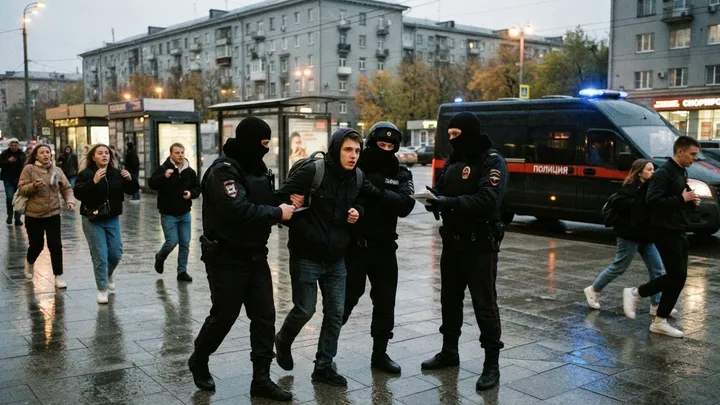
🛒 There is officially no mobilization in Russia, but people are being grabbed off the streets and sent to the war, Oprichnik's Day writes. A fresh example comes from Blagoveshchensk. On the evening of November 23, 46-year-old Alexei Seleznev went out to a store. He never came home, but he did make it as far as a contract with the Russian Defense Ministry.
📞 His niece Anna Lebedeva told the story. The day after he disappeared, her uncle called her from a stranger's number. According to him, he was dragged into a military enlistment office car and taken to a military service selection point. There he was beaten, tortured with an electric shocker and handed a pen. He signed the contract. Seleznev had no documents on him, so new ones were made and a bank account was opened in his name on the spot. Bureaucracy, when it needs to, works faster than an ambulance.
✈️ Seleznev managed to say that he was being taken to a military unit in Birobidzhan. At the unit, relatives were told that the man had already been flown to the Rostov region. From a store to a frontline region in two days, with no training whatsoever. Several other women from Blagoveshchensk and Zavitinsk, whose husbands were taken the same way, called Lebedeva. "What is this, cannon fodder for you?" she asks. The question is rhetorical.
📋 It is interesting what this is called in the Defense Ministry's documents. "Voluntary expression of will"? "A conscious patriotic choice after an explanatory talk with an electric shocker"? On paper Seleznev is, of course, a volunteer. There is a signature, after all.
🗺 Blagoveshchensk is not an exception. Grigory Sverdlin, founder of the "Go by the Forest" project, says that in November alone cases of forced recruitment were found in the Amur, Samara, Omsk, Tomsk, Ulyanovsk and other regions, around 15 reports in all. The scheme is the same everywhere: a man is detained over a trifle such as appearing drunk, and then offered a choice between a cell and a contract. "They just grab everyone, whoever turns up," the project describes this brilliant personnel operation.
📉 The reason is arithmetic. Even a Russian military channel that itself calls the war the "SVO" and dreams of full mobilization admits that the army has entered a phase of "critical attrition." According to the estimates it cites, the recruitment rate is now about 30,000 people a month, 20% lower than in 2025. At this rate the annual plan of 409,000 contract soldiers is failing. In the first 9 months of 2026, 263,000 contracts were signed, against 292,000 a year earlier.
💸 To keep the flow going, the state raised the price of one fighter from 1.4 million rubles (about $17,000) in 2025 to 1.9 million rubles (about $23,000) in 2026. In August alone, regions spent 55 billion rubles (about $680 million) on one-time payments, and paid more than 7.7 billion rubles (about $95 million) to paid intermediary recruiters in 56 regions, according to reports.
🏷 By autumn the regions ran out of money, and a human being on the Russian market sharply got cheaper. In St. Petersburg, by the beginning of November, the one-time payment was slashed from 3.5 million rubles (about $43,000) to 400,000 (about $5,000), that is, by almost 9 times. In Mordovia, since September 15, they pay 800,000 rubles (about $10,000) instead of 3 million (about $37,000). In Mari El, since October 29, it is 400,000 instead of 2.3 million rubles (about $28,000). The clearance sale, as is proper, comes with roundups: if the buyer won't come on his own, he is brought in.
The volunteers whom Russia bought for millions of rubles ran out together with the money. Now the shortfall is covered with people who are detained on the street and forced to sign a contract, and then sent to the front within a day.