Men from Colombia, Peru, Ecuador and Uruguay are promised jobs as cooks and builders, then in Moscow they are given a contract in Russian to sign and taken to the front. Colombian Seneida Muñoz came to Moscow on her own and got her wounded son to file a discharge request.
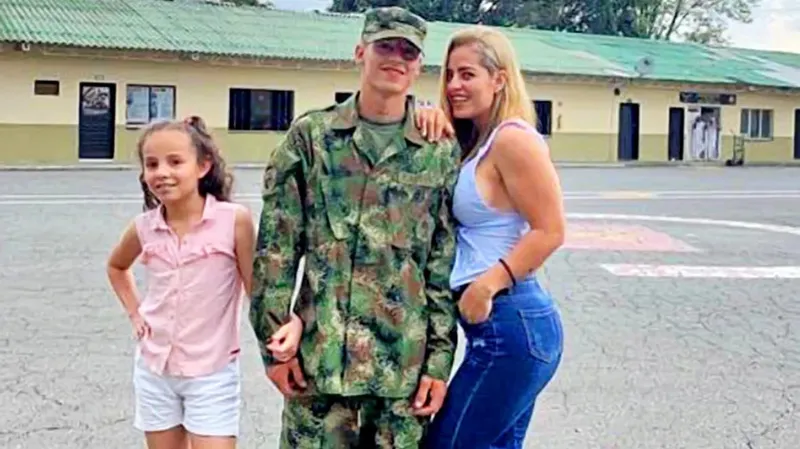
Colombian Seneida Muñoz washes dishes in Moscow in the evenings to pay for her hotel room. A few weeks ago she flew in from a small Colombian town to take home her son, who was tricked into becoming a soldier in the Russian army.
Her 22-year-old son John found a job ad on TikTok. He was sure the job was in Spain. He was promised 6 million Colombian pesos a month, about $1,600, far more than he earned at home. According to his mother, John was recruited by a Colombian who himself serves in the Russian army. "They get paid for every young man they trick into coming to them," Muñoz says.
John left Colombia on May 14. The recruiters arranged and paid for the journey. The young man was passed from one contact to another along the route from Bogotá to Istanbul, and from there to Moscow.
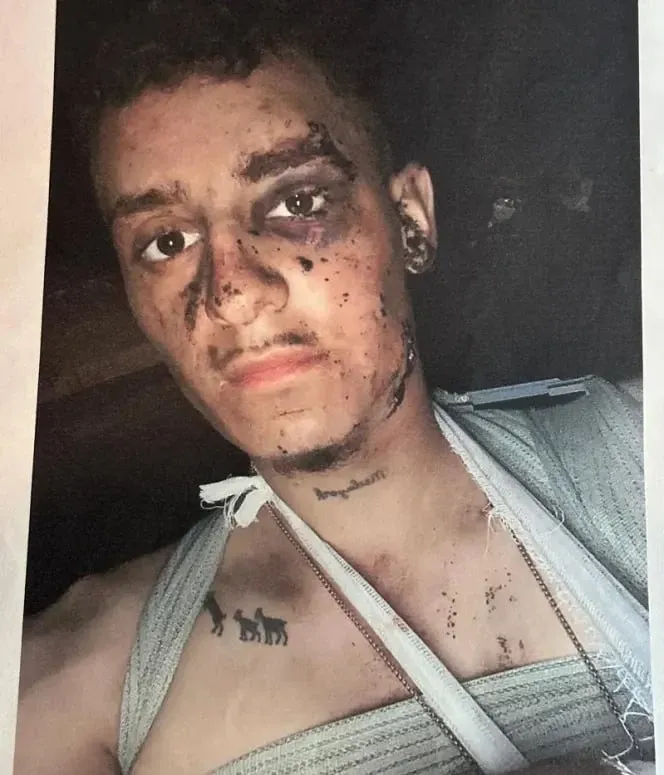
The day after he landed, John signed a contract. He thought he was being hired as a hairdresser, but in fact he became a serviceman of the Russian army. A few weeks later, on his very first trip to the front, a drone strike pierced his lung and left shrapnel in his arm. They tried to send the wounded John to the front line again. That was when his mother decided to fly to Russia.
A scheme for a whole continent
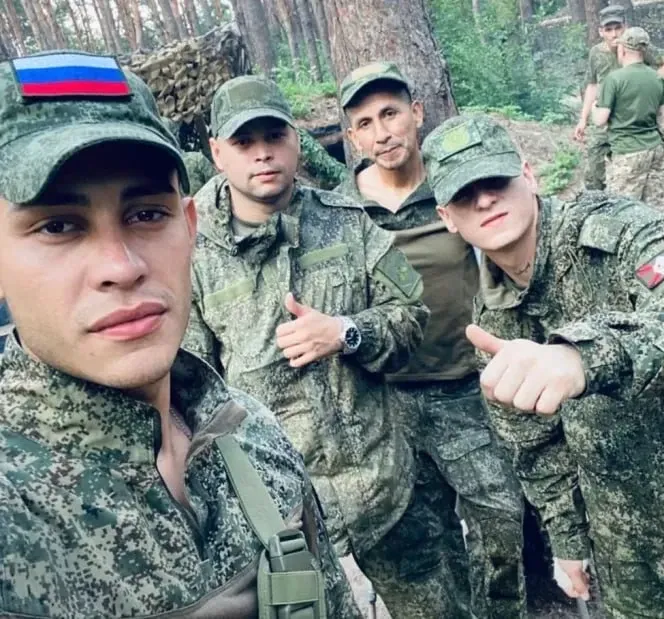
John's story is part of a scheme under which men from Latin America are taken to the war in Ukraine to replenish the Kremlin's army. In October the UN issued a report containing evidence that men from 7 Latin American countries were recruited into the Russian army by deception or under coercion. In all, UN investigators found such practices in 29 countries. The report accused the authorities in Moscow of human trafficking. The UN commission called on the Kremlin to annul contracts signed under deception or pressure and to let the foreigners go home.
Governments in the region are also keeping their own count. In October, Peruvian Foreign Minister Carlos Espa reported to parliament that the Russian side had acknowledged 459 Peruvians in its army. Of them, 25 were killed and another 187 are missing. The figures are growing fast: in August the Peruvian foreign ministry cited 11 dead and 114 missing, so in 2 months the number of dead more than doubled. On November 9, Espa discussed the fate of these people in Moscow with Sergei Lavrov, and the Russian minister promised to respond to families' requests faster.
On October 29, Colombia's foreign ministry announced that the Russian side had notified Bogotá of 94 Colombians killed and 297 missing. Bolivia reported 26 such cases.
The families the journalists spoke with tell similar stories. Their relatives were offered civilian jobs as cooks, electricians, builders and security guards. Others were promised army positions far from the fighting, for example in logistics or guarding bases.
Money was the main bait. Some were promised a bonus of up to $20,000 for signing the contract and a salary several times higher than what they could earn at home. "Maybe he was too tempted by the promised sum," says the mother of a motorcycle taxi driver from northern Colombia. Her son surrendered to Ukrainian troops and is now in a prisoner-of-war camp in Ukraine.
A company with no address and no owners
One name keeps surfacing in the Colombian stories. It is the recruiting company Jaguar Consultoría from Bogotá. Colombian TV journalists found out that no such company is registered with Colombia's chamber of commerce. It has no permanent address, and its owners could not be identified. According to the same investigation, the company later changed its name to Compañía Los Osos.
The recruiters work fast. Some Colombians were given just 1 day to pack, and at least one was told not to tell his family he was leaving. A few days after arrival, each was issued a Russian SIM card, taken to open a bank account and asked to sign a contract in Russian. None of them understood the language.
Tickets were bought from inside Russia
Documents the journalists reviewed show that at least one trip by a group of Colombians was organized from inside Russia itself.
Carlos (name changed), a reservist of the Colombian army, flew to Moscow at the end of May. He was offered a job on a construction site. His ticket was bought the day before departure on the Russian travel site OneTwoTrip and paid for in rubles. A Russian mobile number was given as the contact in the booking.
Travel insurance for Carlos and 6 other Colombians was arranged with T-Strakhovanie, the insurance company of Russia's T-Bank, by a man who did not himself go on that trip. The same day, someone paid about $7,000 on another Russian booking site, Kupibilet, for return tickets for all 7 people. Apparently, the return tickets were needed so that at the border the group would look like ordinary tourists.
In Moscow, Carlos went through the same steps as the others. A hotel was booked for him, a bank account opened and a Russian SIM card issued. A few days later a medical exam showed he was not fit for combat, and he was taken to a hospital.
When part of the contract was translated for Carlos, he saw in it a power of attorney under which other people could receive his salary. He refused to sign it. "This is not the construction work I was promised," he said, lying on a hospital bed on the outskirts of Moscow.
Carlos is afraid of what comes next. The Colombian recruiters accuse him of fraud against the Russian state for refusing to sign the contract. They warn that he faces up to 10 years in prison if he does not repay the cost of the trip. According to Carlos, the recruiters also threatened his family.
A power of attorney over a dead man's accounts
The family of an electrician from Ecuador told a similar story. In June his relatives lost contact with him, and since then all news about him has come only through a recruiter. According to the family, this recruiter's name appears in a document that gives him the right to manage the young man's bank accounts.
The journalists listened to a recording of a phone call in which the recruiter tells the Ecuadorian's wife of his death. He offers condolences, says she will "have the right to receive the money," and promises to pay for her flight to Moscow to sign documents. The family claims that the same man advised them not to approach any consulates. A person who has access to the dead man's accounts is calling the widow to Moscow to sign papers about money. Why would he need the consul not to know about it?
A Uruguayan was promised a job as a cook. He was killed in April, 8 days after being sent to the front line, his father, a retired air force officer, said. The death certificate issued by a military medical center in Rostov-on-Don says he died in an explosion in the Luhansk region on April 19.
Mothers search on their own
Families found each other on social media and exchange lists of the missing and the dead. Some, like Muñoz, travel to Russia themselves and hire interpreters who go with them to military enlistment offices, hospitals and morgues. Others pay people in Russia to search in their place. "Mothers have neither the money nor the means to come to Russia and take their sons back," Muñoz says.
Nilda, a Peruvian woman, paid an intermediary in Russia $500 to look for her brother. Her brother had gone to Russia from Turkey, expecting a job on a construction site. In the end, his grave was found by a Peruvian official who had been sent to Russia. He asked for permission to exhume and cremate the remains.
Muñoz's search ended when she found her son. She read the Spanish translation of his contract line by line. According to her, the contract gives foreign recruits the right to leave, and with that she went to her son's commanders. On November 11, John signed a discharge request. Now he is waiting for surgery to remove the remaining shrapnel from his arm. If the discharge is approved, mother and son will return home together.
John got out because his mother read for herself the contract he had signed blind. Most of the recruited men have no such person beside them. A contract in a language they do not know, a power of attorney over their salary in someone else's hands and advice not to go to the consulate are arranged so that the family learns the man's fate as late as possible.
Muñoz understands how lucky she is. "Thanks to God, to my persistence or to a mother's protection, my son is alive," she says. Most of the families she talks to every day are still waiting for a call, a name on a list, or a body to bury.