Ten months after the capture of Nicolás Maduro, the US controls Venezuela's oil revenues, the terms for lifting sanctions and its access to credit. Oil fields with reserves of 65 billion barrels have been handed for 100 years to a company in which Washington claims a 35% stake.
🛢 Ten months ago the US seized Nicolás Maduro, and since then Washington has effectively become the chief external manager of the Venezuelan economy, writes Neveroyatno, no fakt… The Americans control the movement of oil money, determine the conditions on which sanctions are lifted, decide whether to let Caracas into international finance, and have already signed an agreement to develop the largest fields. The Bolivarian revolution, which fought the "gringos" for years, now checks every payment with them.
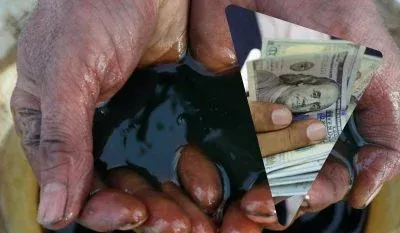
💵 The money flows through an account controlled by the US Treasury. By the end of September, $12.3 billion of Venezuelan oil revenues had passed through it, of which $12.1 billion was sent back to Venezuela. In addition, through a system of temporary licenses and sanctions permits, the US regulates the operations of the state oil company PDVSA, its access to foreign assets and its ability to attract investment. Washington published a report on roughly $12 billion in November.
🏗 The main prize is a 100-year agreement covering 17 oil fields with reserves of about 65 billion barrels. The concessions were awarded to North American Blue Energy Partners, a company of the Venezuelan businessman Alejandro Betancourt, whose activities were previously investigated in the US, Spain and Switzerland. Washington claims 35% of this company and broad rights to buy oil. The White House promises Venezuela $200 billion in taxes and royalties and up to $100 billion in investment. Democrats in Congress, meanwhile, are preparing investigations into whether the deal is legal and how the proceeds are divided.
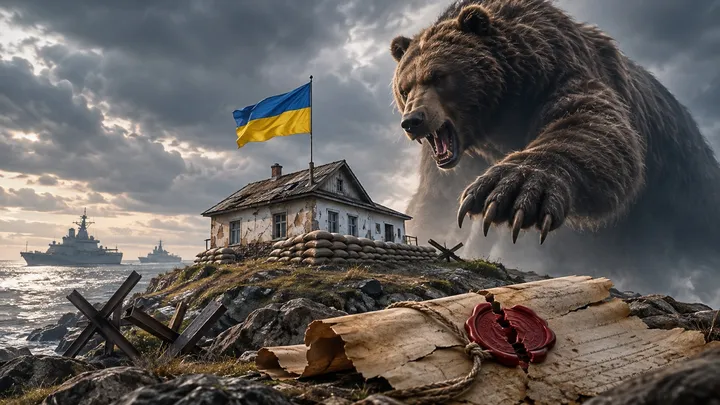
🇷🇺 For Moscow there is a separate line in this story. Back in September, officials told journalists that an American firm would take over some of the Venezuelan fields previously developed by Chinese and Russian companies. A years-long friendship with Caracas ended exactly the way friendships built on oil end: the oil stayed, the friends changed.
🤝 Politically, Caracas is sinking ever deeper under American tutelage. The US has restored diplomatic relations with Venezuela and lifted personal sanctions on Delcy Rodríguez and her brother Jorge. The American road map requires the judiciary to be overhauled by mid-December, then the electoral commission to be reformed, and only after that a presidential election to be held. It is precisely the Americans who are pushing for reform of the Supreme Court and the electoral system.
🗳 The country's most popular politician takes no part in this scheme. In an AtlasIntel poll, María Corina Machado was backed by 56% of respondents, Delcy Rodríguez by 17%. Machado nevertheless remains outside the negotiations, and her ban from holding public office remains in force. So democracy in Venezuela is being built with the one who has 17%, while the one who has 56% is still banned.
🏦 At the same time, Washington is bringing Venezuela back into the global financial system. The IMF has sent its representatives to Caracas for the first time in more than 20 years. The Inter-American Development Bank is considering financing of up to $6 billion, the World Bank up to $5 billion. Repayment of $2.3 billion of debt to an international lender is under discussion, while analysts estimate the country's total public debt at $150-200 billion.
📉 So far the changes have given ordinary Venezuelans nothing. According to a poll by American journalists, 77% of residents consider the state of the economy bad, 75% are dissatisfied with the labor market, and 57% with their own financial situation. Inflation remains high, the bolívar keeps losing value, and the energy crisis has worsened after the June earthquakes and long power outages. There are more oil contracts and exports have grown, but production has not increased significantly, because major investment and the rebuilding of infrastructure are still to come.
The bottom line is this. Venezuela, on which the Kremlin counted as its outpost off the shores of the US, has in ten months become a country where oil revenues pass through the American Treasury, and where a firm in which Washington wants a third received the fields for a century ahead. Russia, meanwhile, could neither protect Maduro nor hold on to its projects.