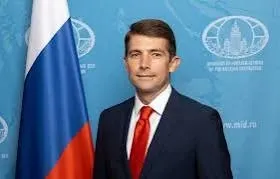
According to anonymous sources of the Telegram channel VChK-OGPU, Maxim Vladimirov, deputy presidential envoy to the North Caucasus Federal District under Putin's envoy, secretly travelled to Vietnam to recruit a "personnel reserve" for the war against Ukraine. In October, Vladimir Putin introduced visa-free entry to Russia for Vietnamese citizens.
An official whose work is confined to the North Caucasus suddenly turns up in Vietnam, and the trip is shrouded in secrecy, VChK-OGPU writes. The channel is talking about Maxim Vladimirov, one of the deputies of Yury Chaika, the Russian president's envoy to the North Caucasus Federal District. According to the channel's sources, more than a month ago Vladimirov unexpectedly flew off on a business trip to Southeast Asia and made sure that as few people as possible knew about it.
What a deputy envoy was doing in Vietnam
At the envoy's office, according to the channel, Vladimirov oversees matters of the Emergencies Ministry, the secretariat and a number of other areas. As the authors of the post claim, neither he nor Chaika's other deputies have any powers outside the district unless the Foreign Ministry has approved the trip. So why would a man responsible for rescue workers in the Caucasus fly several thousand kilometres to Vietnam?
The channel's sources give an alarming answer. According to them, Vladimirov was putting together a certain "personnel reserve" of Vietnamese citizens. These people, the sources claim, are to be sent to Russia, and some of them may get there through the regions of the North Caucasus.
A visa-free regime as a coincidence
The channel draws attention to what followed the trip. On 12 October 2026, Putin signed decree No. 730 on a temporary procedure for the entry of Vietnamese citizens. From 15 October, Vietnamese can come to Russia without a visa and stay in the country for up to 30 days. The regime will last until October 2027. The authors of the post ironically call this sequence of events "an absolute coincidence".
However, the visa-free regime also has a mundane explanation. Putin publicly spoke about it back in September, that is, judging by the dates in the post, before Vladimirov's trip. In the summer the Kremlin likewise extended the visa-free regime for Chinese citizens until the end of 2027. Russia is looking for tourists and partners in Asia, so the decree in itself does not yet prove recruitment. The chronology from the post, therefore, does not add up to an unambiguous picture.
A bet on Vietnam
The sources' main claim concerns a decision taken at the very top. According to them, in May-June 2026 the Kremlin decided to draw citizens of other countries into the war against Ukraine more actively and placed its bet precisely on Vietnam.
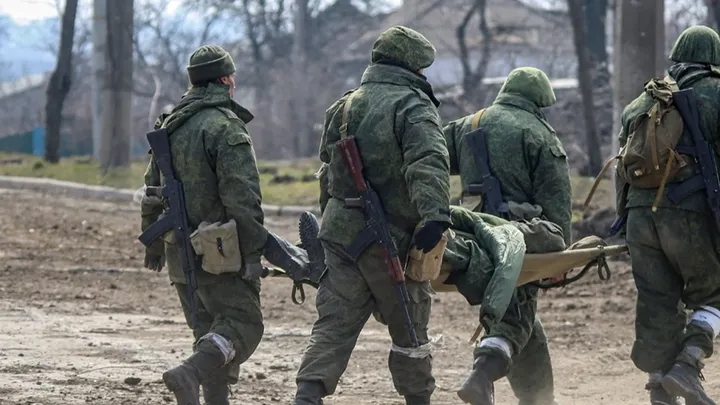
The recruitment of foreigners has long since ceased to be a secret. In April, Ukrainian intelligence estimated that in 2026 Russia intends to recruit almost 20,000 foreigners into its army. In October, Ukraine's military intelligence (HUR) reported that Russia recruits about 1,800 foreign citizens every month. However, apart from the words of the channel's sources, there is so far no confirmation that Vietnam was deliberately included in this flow.
A family business
The channel's source does not rule out that the envoy's son, Igor Chaika, may also be involved in the scheme. In April, Putin appointed him head of Rossotrudnichestvo in place of Yevgeny Primakov. The agency is responsible for Russia's ties with compatriots abroad and for its "soft power" in other countries, and it has representative offices all over the world. The post contains no documents or specific facts about his involvement; the source merely allows for such a possibility.
Father and son Chaika now hold posts that are formally far from the war: one oversees the North Caucasus, the other is in charge of humanitarian cooperation. If the channel's version is confirmed, it will turn out that the Kremlin has enlisted both of these structures in the search for new soldiers. For now, this story contains one official document, the decree on the visa-free regime, and one unverified version of why the deputy envoy flew to Vietnam.