14 November, 04:38
The man behind a Ukrainian call-center empire confirms he bribed the security service, police and prosecutors, and offers anti-corruption investigators a deal
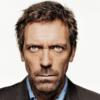
Why would a man wanted by Ukraine through Interpol since 2019 go on air and confirm recordings in which his own voice weighs whether to throw acid in a journalist's face or beat him with hammers? Suspects in high-profile cases usually stay silent or call the tapes fabricated. Yegor Burkin, whom Ukraine's National Anti-Corruption Bureau (NABU) considers the owner of a network of fraudulent call centers and of the U420 chain of shops, did the opposite. In an interview on the YouTube channel of blogger Vasyl Tymoshenko, he said everything on the tapes was true and amounted to 5% at most of what is happening in Ukraine. He summed up his own role in one line: he bought the entire law-enforcement apparatus but did not get into defense procurement in time.
The interview itself answers the question. Burkin came to bargain. He confirms every bribe readily and with figures, because a bribe incriminates first of all the person who took it. Every episode that would make him the guilty party, he denies or hands to someone else. There were no drugs, he says, and no threats. Fingers were cut off by "idiots" in his circle, beatings were the work of his associate Andriy Osipov and his crew, and he had nothing to do with counterfeit euros. He names the buyers of his testimony outright: NABU, the Specialized Anti-Corruption Prosecutor's Office (SAP) and the United States.
So what exactly is he selling, and what is it worth to investigators?
Operation "Carthage" began on September 4, 2026, inside the Prosecutor General's Office. That day NABU and SAP detained Serhiy Kropyva, deputy head of the office's department of international legal cooperation. The irony is that in 2021 Kropyva headed Ukraine's cyber police and fought online fraud. A SAP prosecutor told the court that Kropyva ran the scheme with the full support of Prosecutor General Ruslan Kravchenko. Kravchenko denied it but eventually resigned.
On November 4 the bureau released new material. According to investigators, the group ran 52 call centers and paid $7,000 a month per center for protection. The same day detectives searched the premises of three officers of the Security Service of Ukraine (SBU): Serhiy Duka, head of the department for the protection of national statehood; Anton Kravchuk, head of the SBU's main directorate of internal security; and Oleksandr Kovalchuk, first deputy head of one of the directorates in Duka's department. Osipov, nicknamed "Kriminal," whom investigators consider a co-owner of the network, ended up in NABU's detention facility.
Burkin fills in the picture from the payer's side. He says he went into call centers in September or October 2021. After Russia's full-scale invasion on February 24, 2022, everything shut down, and work resumed only by June or July 2022. A call center paid $21,000 a month for every 50 employees, split into three equal parts: $7,000 to the SBU, $7,000 to the National Police, $7,000 to the Prosecutor General's Office. An office of 100 people paid double, one of 150 people triple. The money went to crypto wallets by the fifth of each month. In return the "roof," as protection is called in post-Soviet slang, received a list of addresses its people were not to visit. Employees' personal data, Burkin insists, was never handed over.
He acknowledges as his own the crypto wallet that appears on NABU's tapes, holding either $2.4 million or $3.7 million: that, he says, was money his people sent for the call centers or for U420. The same tapes carry a line that explains well what the money bought: "You were given 2 million, you're supposed to stand by that call center and keep everyone away." Burkin also describes what happened to those who did not pay. Masked squads would raid the address, seize the equipment and put people face down on the floor, sometimes with a light beating, and after a couple of such visits the staff would scatter.
He disputes NABU's figure, saying the bureau got it wrong with $7,000. There is probably no error. As early as September, law-enforcement sources spoke of $7,000 a month per call center going specifically to people in the Prosecutor General's Office. Burkin names the same sum as the prosecutors' share and adds equal shares for the SBU and the police. The prosecutors' share, he says, went to Kropyva, who kept a small cut and passed the rest to Kravchenko.
So why did 1,500 call centers across Ukraine, by his estimate, operate almost openly for years? His answer is the strongest part of the interview, and he builds it like a logic puzzle. Formally, the money was collected by a man installed by the cyber units of the SBU and the police. That explains why the cyber police never came. But the cyber police department cannot forbid the criminal investigations unit or any other department from entering an office where a crime is being committed. Only the head of the police or the minister can give such an order to every unit at once. Since the other departments did not come either, the heads of the agencies must have been in on it. Mayors and regional governors, according to Burkin, had no part in the scheme. They simply were not needed.
Then Burkin climbs one floor higher. In his telling, the heads of the SBU, the police and the prosecution passed the lion's share of the money to Oleh Tatarov, deputy head of the Office of the President, whom he calls the curator of the entire law-enforcement system. The National Police, Burkin says, still answers to Tatarov through his "kum," a godfather-style family tie, Maksym Tsutskiridze. Since July 2026 Tsutskiridze has been acting head of the National Police, and investigative journalists had already linked him to Tatarov. Burkin adds one more detail. In 2025, he says, the main directorates of the State Bureau of Investigation (DBR) and the SBU reached a tacit agreement not to go after each other, because both answer to one man, whom he calls "Don Corleone."
How much of this is testimony, and how much is guesswork?
Here one has to separate what Burkin knows from what he deduces. At first he paid Duka and Kovalchuk personally, gave Kovalchuk a Mercedes V-Class for his birthday, and through him passed bribes to the DBR so that it would overlook the call centers during his war with a rival organization. That war, he says, was fought over people, and each side "set the security forces on the other." Later the officers began to suspect that Burkin might be recording them and put Osipov between themselves and him; Osipov collected the money on the fifth of every month. This is direct testimony from the man who paid.
About where the money went next, Burkin speaks in very different words: "it seems to me," "this is no secret to anyone," "the minister didn't know, Tatarov didn't know, so 378 million was split by the cyber guys alone? I'll never believe it." He himself concedes that he doubts Duka handed money to Tatarov directly. He is just as careful about the people he says he never reached. The word "Arkh" on the tapes, Burkin explains, referred to David Arakhamia, the parliamentary leader of the ruling party, but he only "wanted to reach" him and never did, so he asks that no stigma be attached. Nor did he reach Ihor Klymenko, then interior minister, although he is sure the minister could not have been unaware. A police officer from the strategic investigations department nicknamed "Price" he did not know personally, but judging by NABU's material he believes the man was "in the know and in on the take."
So Burkin saw the lower floors of the hierarchy with his own eyes and calculated the top floor. The calculation is logical, but only wallets, transactions and screenshots can turn it into evidence, and he promises to hand those to investigators in exchange for a deal.
Burkin uses his own case to show how widely the services of the security forces were for sale. In 2019 he fell out with one of his partners. Later, at the end of 2021 or early 2022, at his request and for $3.5 million, that partner was stripped of Ukrainian citizenship, placed in a holding center for foreigners and prepared for deportation. The passport was eventually returned because it had been obtained lawfully, but the man spent several months in custody. According to Burkin, searches of competitors and inconvenient people were ordered the same way. That is what he means when he says that in Ukraine "everything is for sale."
His numbers deserve the same caution as his conclusions. He counts 1,500 call centers at $21,000 as $31.5 million a month and $350-370 million a year, then a few minutes later says $378 million. He first puts the total flow of money that call centers brought into Ukraine at $2-3 billion a month, and near the end of the interview at $20 billion a year. The first estimate implies $24-36 billion a year; the second is noticeably lower. Neither can be checked, but both serve the same purpose. Burkin compares the $20 billion with Ukraine's pre-war budget, which he remembers as $49 billion or $57 billion, and asks where the country will now find that money. Fraud that, according to NABU, harms tens of thousands of people a year becomes, in his telling, an industry too valuable to lose.
He applies the same trick to the call centers themselves. Burkin lists their lines of business in detail. Some call in the name of banks and coax data out of pensioners and other trusting people. Others work forex, pyramid schemes, fortune-telling and dietary supplements. A third kind specializes in "investment recovery": they call people who have already been defrauded and promise to get their money back, in order to defraud them again. The most lucrative line, bank fraud, could bring an office of 100 people $5-10 million, he says. Such offices also targeted Americans, and the authorities looked the other way. For himself Burkin claims only fortune-tellers and supplements, "the most harmless," where they "exaggerated the benefits a little."
He describes the structure of his offices only in outline. Rank-and-file staff warmed up the client, others "closed" the sale, above them were managers and coaches who trained the staff. There was an in-house security service in case of violent attacks, since the business was gray, and a finance department. The call centers' HR department also recruited staff for the U420 shops. Burkin refused to name names or describe the hierarchy in more detail, saying he did not want to cause trouble for the people who worked with him.
Why did the system end? According to Burkin, it was shut down after Ukraine's European and American partners "slapped the country's leadership on the wrist." He estimates that 80-90% of the call centers have closed. The rest operate "partisan-style" in groups of 5-10 people in apartments and houses, and some staff are moving to Albania and Serbia. With a new law that, he says, exposes call-center workers to 10-12 years in prison, he does not expect the old system to return. His own account leads to a simple conclusion. $21,000 a month bought freedom from raids at home, but bought nothing against pressure from Washington. The protection was worth exactly as long as the partners' patience lasted.
The other half of his business, the U420 chain, ran on the same model, only right at the edge of the law. At its peak the chain had about 110 outlets, mostly in Kyiv, Odesa, Lviv and Kharkiv, roughly 80 owned and 20 franchised. It sold herbal blends treated with a synthetic cannabinoid that Burkin bought from factories in the Czech Republic and Poland and calls legal, as well as CBD drinks from a Ukrainian producer. The packaging read "souvenir, not for consumption," which Burkin does not deny.
The chain opened in summer 2025. A few months later Ukraine banned the semi-synthetic cannabinoid HHC, and the shops closed. A month after that new products arrived, but on December 5, 2025, the government banned that formula too. Burkin says 2-3 tonnes of stock worth two or three million dollars had to be burned. In spring 2026 the National Police drug enforcement department came to the shops. The seized goods were later returned to franchise partners because experts could not identify the new formula. Burkin explains why: the Czech suppliers "hide the formula more carefully this time." It is probably the most candid line about the U420 business in the whole interview. A legal product has no reason to hide its composition from forensic experts. Hiding it makes sense only for someone who knows the next formula will be banned just like the previous two.
Burkin himself names the drinks as his weakest point. Police seized 10 tonnes of cans, and in each, he says, the THC content stayed within the permitted 0.3%. The drinks were certified, paid for by bank transfer and sold not only in U420 but in large retail chains across Ukraine. If investigators calculate THC across the entire seized volume, then by Burkin's logic it is the producer, not the reselling shop, that should answer under Article 307 of the Criminal Code, which covers drug trafficking. He warns investigators in advance that they "will have to answer" for such a calculation.
Here too the money flowed upward. By April and May 2026 the chain's daily turnover, Burkin says, reached 4 million hryvnias, about $90,000. By his calculations the chain was to earn $1 million in May and reach $1.5 million in net profit a month by September. Out of that turnover, $400,000 to $700,000 a month went to those who promised protection. The middlemen were Oleksandr Karamushka, a former SBU officer, and Serhiy Buliy. They assured Burkin's people that they were paying the health ministry and the drug police, which, Burkin admits, turned out to be a lie. Buliy, he says, has already been released from pretrial detention, and Karamushka is escaping responsibility for the second time; Burkin links this to Karamushka's mother being a judge. Burkin's own people, meanwhile, remain in custody.
Osipov, according to Burkin, separately paid Anton Kravchuk to stay out of the way and not push bills that would ban the business. Dmytro Torhala of the drug enforcement department, who raided the shops, Burkin says he wanted "removed" from his post for $2 million, since in Ukraine everything is for sale anyway. Now he publicly apologizes to him and calls Torhala an honest officer, while accusing him of splicing together the recordings of threats against officers' families from fragments of other conversations.
The chain's end goal explains why Burkin was willing to spend all this. His people prepared a folder for parliament with arguments for legalizing marijuana. By the time legalization came, Burkin expected to own 200-300 shops and be the largest player on the market. In plain terms, U420 was a beachhead: the chain paid to survive until a law that would make it a near-monopoly. It never recouped the roughly $2 million invested. In the interview he keeps up the same campaign, advising the state to legalize marijuana and prostitution and use the revenue to raise police salaries.
How does Burkin explain the threats? His answer is worth remembering, because it applies to the interview itself. Talk of acid and hammers for investigative journalist Denys Bihus, he says, was a show for Osipov and the security officers. The officers kept raising their demands, and he needed them to believe he was capable of anything. After such conversations the demands came down. He repeats his favorite saying, roughly "a good bluff is worth more than money," and invites anyone to check police records for a single acid attack in Ukraine. His only grievance with Bihus, he says, is that a December 5, 2025 report called the U420 chain drug dealers. Burkin's people tried at the time to reach Bihus's co-host or wife to give their side.
A military veteran mentioned on the tapes, Burkin says, received $15,000 and kept quiet. Asked about the arson of blogger Stas Dombrovsky's house and car in Odesa, Burkin says he would rather stay silent: let everyone guess whether it was him, since that keeps "discipline in the organization" tighter. Dombrovsky, he says, used to work with him and was the face of a campaign called "Turn in a Dealer," which paid citizens to catch drug dealers and hand them to the police. Burkin explains its purpose as proving to law enforcement that he himself does not sell drugs in Ukraine and forcing them at last to send his 2019 case to court. The partnership ended when Dombrovsky, in Burkin's version, tried to blackmail him.
In other words, Burkin himself describes fear as his main management tool. Fear costs nothing and works equally well on subordinates and on officers. The interview follows the same rule. Toward the end Burkin reminds viewers that if he is caught, a laptop will be found in his home, and then "many will end up exposing themselves." So he advises everyone to think hard and strike a deal with him. It is the same threat, now addressed to investigators and to whoever stands above Duka.
He wields compromising material just as confidently. With member of parliament Mykola Tyshchenko, Burkin says, he cooperated on call centers before the hierarchy took shape. Tyshchenko promised to connect him with the security forces and sent photos of himself with officers, but, as it turned out, never mentioned Burkin at those meetings. Then Tyshchenko demanded a cut, $1 million up front plus a monthly "constant for the duration of his term," and at the same time began showing up at Burkin's call centers in front of cameras, staging a crusade against them. Burkin then released recordings of their conversations and revealed that he had funded Tyshchenko's charity dinners abroad with sums of $70,000 to $200,000. Asked whether he leaked the tapes in which Tyshchenko wants a share of the call-center money, Burkin answered with one word: "Yes."
He sees the same market in the media. Placing or deleting a story can be bought almost anywhere, he says, except at a handful of outlets that value their reputation. He names Ukrainska Pravda, Bihus and Prytula. He also claims that SBU officers, having learned that he intended to talk, are going round the journalists they control and threatening them with Article 111, high treason, if anyone interviews him or gives him a platform.
What does he want in return?
Burkin repeats several times that he is ready to cooperate with NABU and SAP and counts on a suspended sentence. He does not plan to come to Ukraine for now, because NABU, he says, cannot guarantee his safety. He claims he has already cooperated with the Americans, passing them information on drug trafficking. His main grievance goes back to the 2019 case. Back then the SBU's "Department K," from which Duka's department later grew, raided him, and about $10 million, he says, vanished from safe-deposit boxes. Those convicted in that case served their sentences long ago, but the case against Burkin himself has not reached a court in 8 years. He believes it is kept open as a lever against him and his people. In 2023 Ukraine imposed sanctions on him, initiated, he says, by the very department he was paying. His explanation of why he is talking now fits in one line: "As they treat me, so I treat them."
Separately, Burkin describes how the SBU is raising money for Duka's bail. Low-ranking officers in the provinces earning about 30,000 hryvnias, roughly $670 a month, are being made to chip in, he says. He offers to bring a dozen such officers on air to confirm it.
One detail of the interview matters more than the rest, though Burkin drops it in passing. He is a native of Russia and holds two citizenships, Russian and Ukrainian; he obtained his Ukrainian passport through marriage. NABU's tapes include his words about contacts with Russian intelligence. Burkin explains them this way. SBU officer Roman Rudyk, whom he knew "from corruption business" and who was later charged with high treason, once asked him to talk to the Russian side "on the subject of crypto." The Russians began trying to recruit him, and he says he refused. The refusal cannot be verified. Something else, however, needs no verification. A security apparatus that, by Burkin's account, sold "absolutely everything" sold it to a Russian citizen, and his channel to Russian intelligence was provided by an officer of Ukraine's own security service.
The most explosive part of the interview belongs to the host. Tymoshenko read out material that, he said, had been passed to him about Yevhen Smirnov, also known as Zaifert. Police in Novosibirsk, Russia, have been seeking Smirnov since 2016 under the article on large-scale drug sales. According to this material, he crossed the Ukrainian border on a Russian passport in the name of Yevgeny Dorodnov, although the real Dorodnov lives in Russia. Several names appear in Smirnov's documents: Dorodnov, Zaifert, Serhiy and Yevhen Diakunov, and in November 2025 documents in yet another name, Yevhen Sobol, were issued to him in Kyiv. In 2024 he received refugee status in Ukraine and was removed from the international wanted list, and publicly he is listed as a co-founder of the blockchain company ET Club since 2015 and of Everstake since 2018.
Together with Ukraine's Ministry of Digital Transformation and the FTX exchange, Everstake launched the Aid for Ukraine crypto fundraiser, and in May 2022 it released a rap video featuring Mykhailo Fedorov, then minister of digital transformation. According to the host's material, in April 2022 a criminal case was opened over the purchase of $12.2 million worth of drones paid for in cryptocurrency, which the army never received. In January 2025 the National Police's main investigative directorate opened a second case over the possible embezzlement of about $42 million, part of which, more than 100 bitcoins, went to a wallet resembling a crypto mixer.
What did Burkin add? Smirnov, he says, has nothing to do with his group but knows it through Duka and Kovalchuk. Duka "worked" Smirnov from 2018, fleeced him just as he fleeced Burkin, and after that they became friends. According to Burkin, criminal cases have been opened against Smirnov at the SBU and the National Police, including its drug enforcement department, but investigators are not allowed to pursue them, possibly with Duka's help. He states his main accusation directly: people linked to Smirnov "managed to get into the defense sector with Fedorov's help," with joint projects including drone procurement. Burkin explains his own absence from defense procurement simply: he was "less lucky" and "didn't make it in time," unlike his "nimbler colleagues." His evidence of a link between Smirnov and Fedorov consists of the documents the host read out and Fedorov's verse in the Everstake rap.
Fedorov served as defense minister from January 14, 2026, and left the post in July. The question of who controlled the wallets into which the ministry itself urged people to send money remains serious. The answer should come from the National Police investigations; a verse in a music video proves only acquaintance.
Burkin closes the interview with a reform program. Honest agencies, in his view, survive where a selection commission, not the Office of the President, picks the head, and where salaries are decent. He names NABU and, with a caveat, the Economic Security Bureau. He also considers the Foreign Intelligence Service and military intelligence (HUR) clean, but explains it without illusions: they never had law-enforcement powers and could not carry out inspections, so people like him simply had no use for them. As long as the heads of the SBU, the DBR, the police and the prosecution depend on a single phone call, Burkin argues, corruption is inevitable. It is the same demand for competitive selection on which NABU itself was founded. It is strange to hear it from a man who exploited that very dependence, but that is precisely why it is hard to dismiss. The payer knows what he was paying for.
What follows from all this? The lower floors of the hierarchy Burkin describes are already confirmed by investigative documents: Kropyva has been detained, Kravchenko has resigned, Duka, Kovalchuk and Kravchuk have been searched, and Osipov is in NABU custody. Burkin predicts a "Carthage 3" and is confident that the remaining recipients of the money are recorded in Osipov's phone. The top floor he names, the Office of the President and Oleh Tatarov, remains his deduction for now. Only what Burkin keeps to himself can turn that deduction into evidence: the crypto wallets, the transaction screenshots and the laptop. Those are exactly what he has put up for sale. The next move now belongs to NABU, which must decide whether to buy testimony from a man who has himself called bluff his main currency.